
Crackdown on Online Speech, Journalism during Thai-Cambodia Border Conflict
Published on 31 October 2025

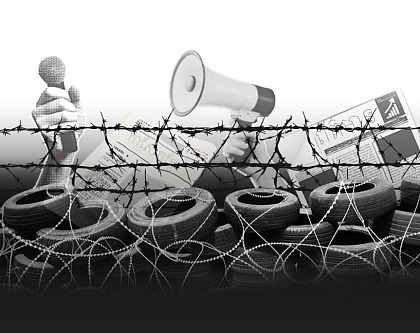
The Thai-Cambodia border conflict that erupted in late July saw Cambodia’s authorities escalate their crackdown on free expression. In the weeks of heightened tension, at least 16 journalists and social media users were arrested for expressing views relating to the conflict, at a time when access to accurate information was most direly needed.
LICADHO documented at least four journalists detained over their reporting on the conflict. One was released after signing a contract with authorities, while three others have been formally charged with crimes. Porn Sopheap and Pheap Pheara, two journalists arrested after they posted a photograph of themselves alongside Cambodian military soldiers at Ta Krabei Temple that Thai media outlets later claimed showed unplaced land mines in the background, face between 7 and 15 years in prison on the treason charge of "Supplying a foreign state with information prejudicial to national defence" under Article 445 of the Criminal Code.
A further 12 people have been arrested for expressing opinions related to the border conflict, mainly through social media posts. While the majority of those detained were political activists, civilians and active social media users were also swept up in the crackdown.
Two monks from Stung Treng province were stopped and questioned by authorities while delivering materials to villagers along the border. After one of them posted on Facebook objecting to the questioning, both monks were arrested and charged with incitement.
In a separate case, a well-known lotion seller known as Love Riya was arrested at her home by around 30 police officers and subsequently detained. Her arrest came after Facebook posts she made sharing her willingness to continue buying legally available Thai products amid the conflict, and claiming to be the child of a dragon king. She remains in pre-trial detention on charges of incitement and demoralization of the army under Articles 496 and 472 of the Criminal Code.
There has also been a wave of arrests targeting members of the political opposition for expressing opinions in relation to the border conflict, typically through Facebook posts, comments, or shares. Phon Yuth, a well-known and outspoken political activist who was previously jailed in 2019 and 2024, was arrested at his home in Takeo on 29 October. A statement from the Takeo court indicates he has been charged with incitement over Facebook posts related to the border conflict.
Soeung Heang, a district chief for the National Power Party (NPP) in Battambang province, was detained in August over a comment he allegedly made on the Facebook page of former opposition parliamentarian Um Am San. At least three other NPP members have also been arrested for expressing opinions about the border conflict, including 45-year-old activist Sok Son in Siem Reap, 70-year-old Leng Lon in Phnom Penh, and 75-year-old Keo Heang, a party provincial secretary who shared a post related to the recent amendments to the Citizenship Law.
This wave of arrests paints a worrying picture. The right to express, document, and freely share information is crucial. The heavy-handed repression tactics exercised by the Cambodian authorities during and since the Thai-Cambodia conflict does not address the legitimate grievances of citizens, but instead violates their basic rights to freedom of expression as enshrined in Cambodian and international law.
Disagreeing with the government or its policies is not criminal act, and should not be prosecuted as such. Resilient and lasting national strength is built on a diversity of viewpoints and the space and freedom to express those viewpoints without fear of government retaliation.
MP3 format: Listen to audio version in Khmer